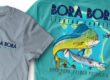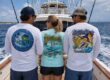
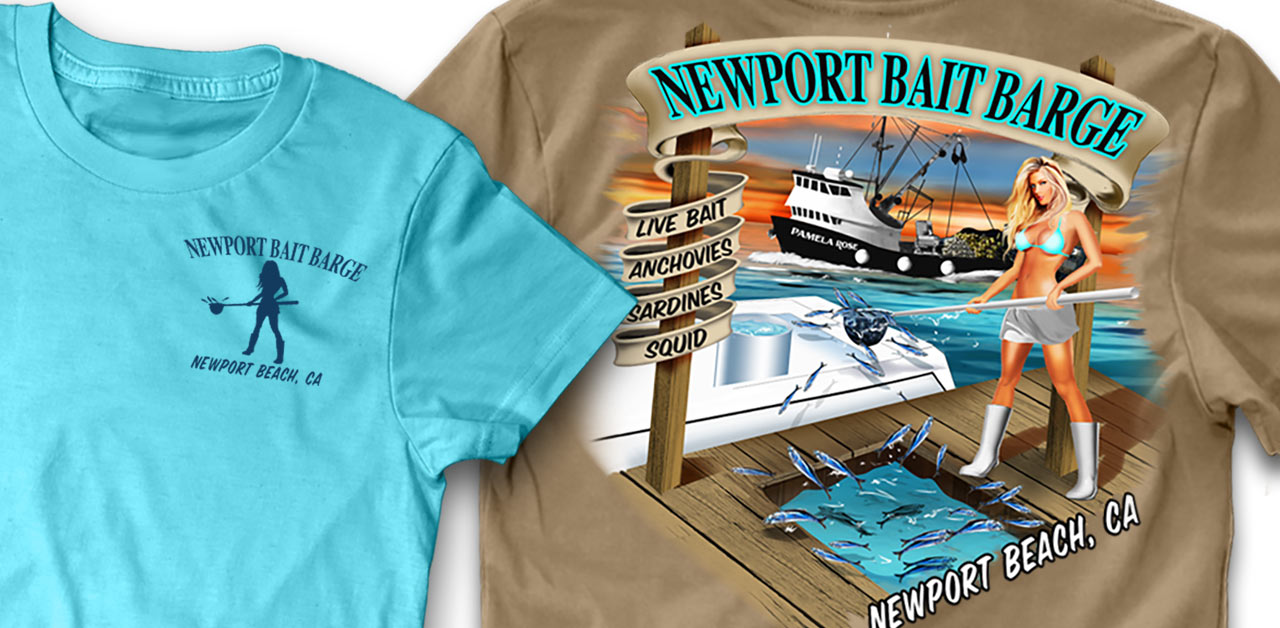
Custom boating shirts for tournaments and regattas differ from everyday boat apparel in three specific ways: they have to satisfy rules set by an organizing body, they have to carry sponsor and crew information in exact positions, and they have to hold up under a camera at the weigh-in dock. Everyday boat apparel answers to nobody. Competition apparel answers to a rulebook, a sponsor list and a photographer.
That gap is bigger than most teams expect until the week before the event. A shirt that looks great on a Saturday sandbar run can be non-compliant at a sanctioned tournament, unreadable in a race photo, or missing the one patch that keeps a sponsor happy. The design has to solve a competitive problem, not just a personal one.
How Custom Boating Shirts for Tournaments and Regattas Differ from Everyday Boat Apparel
Custom boating shirts for tournaments and regattas are working uniforms with compliance requirements, while everyday boat apparel is personal expression with no constraints. That single distinction drives almost every other design decision, from where the logo sits to which fabric gets ordered.
Here is the practical breakdown:
| Factor | Tournament and Regatta Apparel | Everyday Boat Apparel |
| Rules | Sanctioning body patch, size and placement requirements | None |
| Logo count | Sponsors, event, team, angler name, boat name | Usually one or two elements |
| Fabric | Performance polyester, UPF rated, quick-dry | Anything comfortable, cotton is common |
| Print method | Dye sublimation for full coverage and multi-logo layouts | Screen print or DTG is usually enough |
| Quantity | Full crew plus spares, often 10 to 100 pieces | 1 to 6 pieces |
| Lead time | 4 to 8 weeks with a hard, immovable deadline | Flexible |
| Photo readability | Critical, must read on camera and from the dock | Not a factor |
The audience for both categories is enormous, which is why the two get confused. The National Marine Manufacturers Association reported in January 2026 that roughly 85 million Americans participate in boating each year across an estimated 11 million registered boats. The American Sportfishing Association’s 2026 Special Report on Fishing put U.S. fishing participation at 57 million people in 2025, about 18% of the population, across 918 million total outings. Only a slice of that group competes, but that slice buys apparel with very different specifications.
Competition Apparel Answers to a Rulebook
Sanctioned events publish apparel requirements, and they are more specific than most people realize. This is the single clearest line between competition shirts and everyday boat wear.
Take one documented example. Under B.A.S.S. Nation official rules, every boater and non-boater agrees to wear an official B.A.S.S. shield measuring 2.25 by 2.75 inches on either the left or right chest, with the top of the shield hitting the collarbone, and it must be printed or embroidered rather than stuck on. That patch has to be worn during competition and at the weigh-in. Tournament officials will supply a sticker or hat at registration if a jersey shows up without it.
Rules like that change the artwork brief. A designer has to reserve chest real estate before drawing anything, and the sanctioning mark cannot be resized to fit a nicer layout. Everyday apparel has no equivalent constraint, which is why a shirt designed for the sandbar rarely converts cleanly into a competition jersey.
Sponsor Obligations Add Another Layer
Sponsor logos are the second rule set, and they carry contractual weight. Organizers commonly reserve the right to restrict patches or logos that compete with official event sponsors, so a team cannot simply print whatever brands paid them.
Placement value is real money in competitive fishing. Bassmaster has documented how pros price logo positions differently, with prime chest and shoulder placements commanding more than sleeve or lower-back positions. Fishing tournament custom shirts therefore need a layout plan that ranks sponsors by tier before a single graphic is drawn. Studios that handle marine branding end to end, like Bold Water, build that hierarchy into the composition instead of squeezing logos in afterward.
Design Priorities Shift When Cameras Are Involved
Everyday boat apparel is seen from arm’s length. Competition apparel is seen from thirty feet away, through a long lens, in harsh midday light. That changes what works.
Design choices that survive a weigh-in stage or a race committee boat photo:
- High contrast between graphic and garment. Mid-tone art on a mid-tone shirt disappears on camera.
- Type sized for distance. Boat names and team names should read from the crowd barrier, not just in a mockup.
- Clean silhouettes over fine detail. Hairline strokes and small gradients turn to mush at broadcast resolution.
- Back-panel identity. The back of the shirt is what appears in most weigh-in footage and drone shots.
- Consistent color across garment types. Long sleeve, short sleeve and hoodie versions must match in the same photo.
Everyday shirts can be subtle. Competition shirts cannot afford to be. That is also why teams often order the same design across multiple garment styles, since weather on tournament morning rarely matches the forecast. Bold Water accounts for that upfront by building each concept to hold up on a long sleeve, a short sleeve and a hoodie without redrawing the artwork three times.
What Regatta Crews Need That Fishing Teams Do Not
Regatta apparel prioritizes fleet identification and shore-side presentation, while fishing tournament apparel prioritizes sponsor exposure and species branding. Both are custom, but the briefs read differently.
A real regatta brief shows this well. Organizers of the LOWISA 50 event on Lake of the Woods specified race committee shirts with bold, non-tropical graphics, a maximum print area of 14 by 14 inches, vector art delivered at 300 dpi as PDF or AI files, sleeve art support, and moisture-wicking technical fast-dry fabric on solid-color garments. Note what is on that list and what is not: no sponsor tiers, no species art, but hard specifications on file format, print area and fabric.
Regatta custom boating shirts typically carry a different mix of elements:
- Yacht club burgee or class insignia
- Event name, edition number and year, since regattas often celebrate anniversaries
- Race committee, safety boat or crew role designations
- Boat name and sail number
- Venue coordinates or a regional landmark
There is also a merchandising angle that fishing tournaments handle differently. US Sailing’s guidance to junior regatta organizers is direct on this point: customized, event-specific merchandise sells better than generic merchandise. For a regatta, the shirt is often a revenue line, not just a uniform. Scoping that properly is easier when the artwork, sizing and print method get quoted together, which is what the apparel design quote request process is built to handle.
Fabric and Construction Under Competition Conditions
Competition days are longer and harder on a garment than a typical outing. A tournament angler may be on the water from before sunrise until the afternoon weigh-in, then stand on a stage in the same shirt.
What that demands:
- UPF 50+ performance polyester. UPF 50+ blocks 98% of UV radiation and stays effective through washing because the protection is built into the fiber rather than applied on top.
- Moisture-wicking and quick-dry construction. Cotton holds water, gets heavy and stays wet after a wave over the bow.
- Anti-microbial treatment. Useful for multi-day events where laundry is not an option.
- Flat or ergonomic seams. Reduces chafing during long casting sessions or extended hiking on a rail.
- Vented panels and thumbholes. Common on offshore and sun-hoodie styles.
Regatta crews add one more requirement: layering. Race mornings often start cold and finish hot, so many crews order a matching quarter-zip or spray-top layer alongside the shirt. The design has to survive being scaled down for a chest panel on outerwear.
Everyday boat apparel can skip most of this. A soft cotton tee with a boat name on it is perfectly good for a Sunday cruise, and it costs meaningfully less.
Print Methods Built for Competition Day
Dye sublimation is the default for tournament and regatta shirts, and the reason is structural. The ink becomes part of the polyester fiber rather than sitting on the surface, so the graphic covers seam to seam, will not crack or peel, and does not block airflow through the fabric.
That matters when a jersey carries eight sponsor logos across the chest, sleeves and back. A screen-printed version of the same layout would need a separate screen per color and would still leave a heavy ink slab on the garment.
The economics changed the sport. Bassmaster has documented that fully embroidered sponsor jerseys once cost roughly $200 to $250 each, which put a handful of shirts close to $1,000. Affordable dye sublimation replaced that model and made multi-garment tournament boat crew apparel realistic for teams at every level, from high school series to professional trails.
Other methods still have a place. Embroidery reads as premium on polos, quarter-zips and hats, which is why yacht clubs and charter operations often use it for shore-side pieces. Screen printing remains the cost leader for large runs of spectator and volunteer shirts with a simple two-color design. Teams that need one visual identity carried across jerseys, hats, decals and boat graphics benefit from a studio that offers the full range of marine design services rather than sourcing each piece separately.
Lead Times, Sizing and the Mistake Teams Keep Making
Order competition apparel eight weeks out. The deadline is fixed and the event will not move for a late proof approval.
Industry turnaround for fully custom sublimated team apparel commonly runs 2 to 5 weeks in production after the design is finalized, with some suppliers quoting a standard 3 to 4 weeks. Regatta suppliers frequently require a 50% deposit before production begins and quote roughly 4 weeks from approved order to delivery. Add original artwork time on the front end and the realistic window looks like this:
- Artwork development and revisions: 1 to 3 weeks
- Proof approval and sponsor sign-off: 3 to 7 days, longer if multiple sponsors must review
- Production after approval: 2 to 5 weeks
- Shipping and buffer: 1 week
The mistake teams keep making is collecting sizes last. Sublimated garments are cut and sewn after printing, so sizes cannot be swapped from stock. Request a sizing kit or lock in sizes during registration, not the week of the event. Order 10% to 15% spares for late roster additions, sponsors and family members who will inevitably ask.
The second most common mistake is submitting sponsor logos as low-resolution screenshots. Vector files are the standard for a reason. Chasing down clean logo files from six sponsors takes longer than the printing does, and the contact page is the right place to start that conversation before the artwork clock even begins.
Where Everyday Boat Apparel Still Wins
Everyday boat apparel wins on cost, comfort and emotional durability. No rulebook, no sponsor politics, no deadline.
A custom shirt built around a boat name, a home port or a favorite species gets worn for years because it means something personal rather than representing an obligation. That is a different kind of value, and it is why many crews order both: a competition jersey for event days and a relaxed shirt for everything else. Bold Water builds both from the same visual identity, so the family shirt and the tournament jersey look like they belong to the same boat.
The smart approach is to design the identity once, then adapt it. A back-panel illustration, a simplified left-chest mark, a stitch-ready embroidery version and a sponsor-layout jersey are four deliverables from one concept. Planning them together through a single custom apparel and t-shirt design project costs less than commissioning them one at a time.
Frequently Asked Questions
What is the difference between a fishing jersey and a regular fishing shirt?
A fishing jersey is a competition garment built to display sponsor logos, angler names and sanctioning body patches, usually produced with dye sublimation on performance polyester. A regular fishing shirt is a sun-protection garment with minimal branding. The jersey prioritizes visibility and compliance, while the regular shirt prioritizes comfort and cost.
Do tournament anglers have to wear sponsor logos?
Not always, but most sanctioned events require the organizing body’s own patch or logo. B.A.S.S. Nation rules, for example, require an official B.A.S.S. shield of 2.25 by 2.75 inches on the chest, printed or embroidered, worn during competition and at the weigh-in. Personal sponsor logos are optional but are typically restricted if they conflict with official event sponsors.
What fabric is best for tournament fishing shirts?
Lightweight polyester microfiber with a UPF 50+ rating is the standard for tournament fishing. It blocks 98% of UV rays, dries quickly after spray, and accepts dye sublimation so the full-color graphics never crack or peel. Cotton is not recommended for competition because it holds moisture and offers far less sun protection.
What should be printed on regatta crew shirts?
Regatta crew shirts typically carry the boat name, sail number, yacht club burgee or class insignia, the event name with its year or edition, and crew role designations. Many organizers also add venue coordinates or a regional landmark. Event-specific detail matters because customized regatta merchandise reliably outsells generic merchandise.
How early should a team order custom tournament shirts?
Order eight weeks before the event. Artwork and revisions take 1 to 3 weeks, sponsor proof approval takes several days, production runs 2 to 5 weeks after approval, and shipping adds another week. Sublimated garments are made to order and cannot be size-swapped from stock, so sizes need to be collected early rather than the week before.
The Bottom Line
Custom boating shirts for tournaments and regattas are compliance-driven uniforms, and everyday boat apparel is personal gear. Treating them as the same product is how teams end up with a jersey that misses a required patch, a sponsor logo nobody can read on camera, or a shipment that lands two days after the weigh-in.
Get the rulebook first, lock the sponsor hierarchy second, choose dye sublimation for anything multi-logo, and give the project eight weeks. Everything else is design, and design is the easy part when the constraints are known upfront.