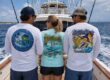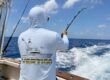
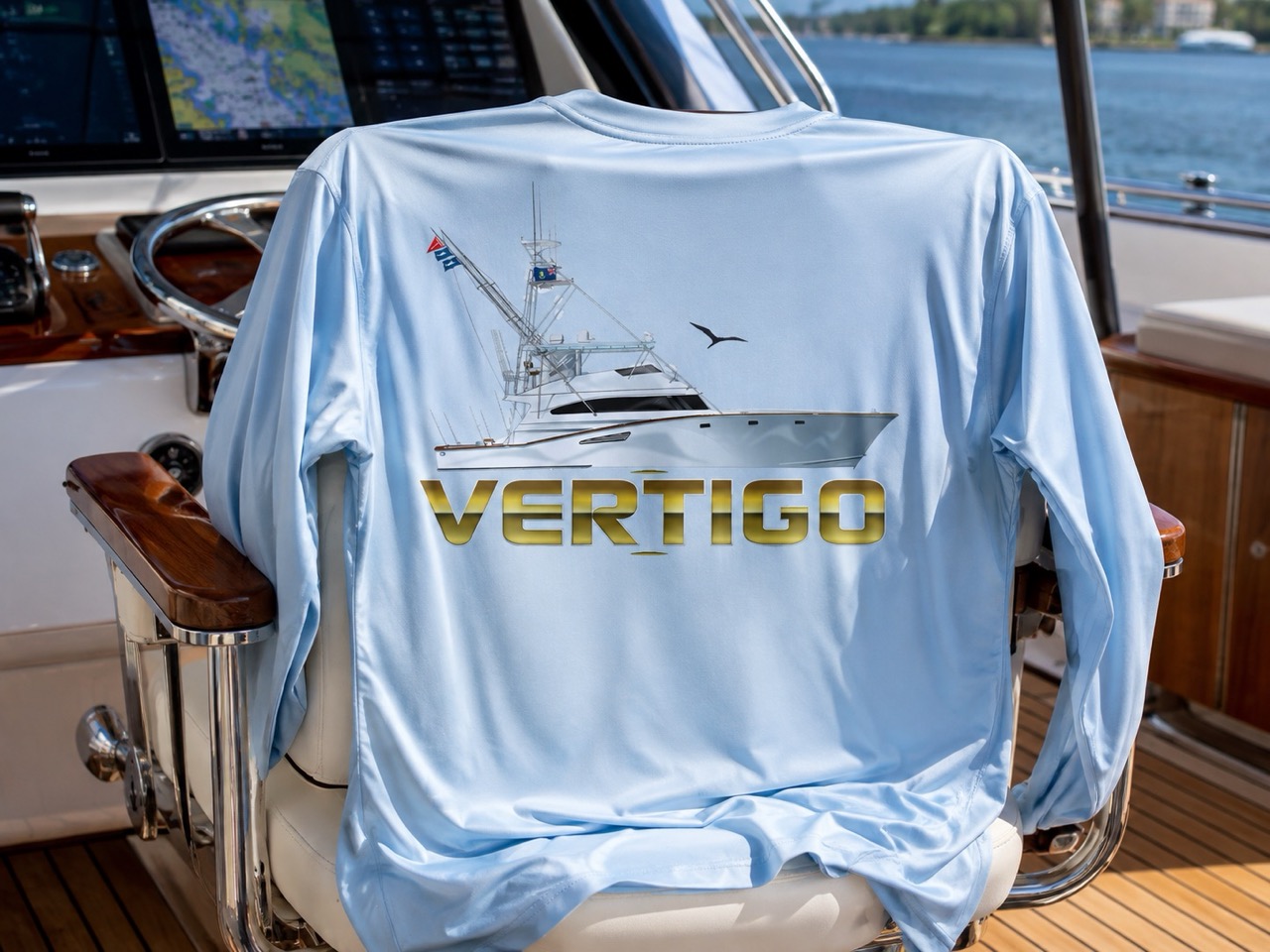
UPF-rated custom boating shirts protect crews by physically blocking ultraviolet radiation before it reaches the skin, and unlike sunscreen, the protection does not wear off, sweat off or need reapplying every two hours. A garment rated UPF 50 blocks 98% of UV radiation and allows only 1/50th of it through. That number holds from the first cast at sunrise to the last line tied off at dusk.
That distinction matters more on a boat than almost anywhere else. Sunscreen fails in exactly the conditions boating creates: constant spray, sweat, wet hands, and eight hours between the dock and the ramp. A shirt cannot be forgotten, cannot be applied unevenly, and cannot be washed off by a wave over the bow.
How UPF-Rated Custom Boating Shirts Work Through a Full Day on the Water
UPF-rated custom boating shirts work by combining tightly constructed synthetic fiber with UV-absorbing treatments that stop radiation at the fabric surface. The protection is engineered into the textile rather than applied to the skin, which is why it performs consistently across an entire day instead of degrading hour by hour.
The mechanism is straightforward:
- Fiber structure blocks transmission. Polyester and nylon inherently resist UV better than natural fibers.
- Weave density limits gaps. UV passes through the spaces between yarns, so tighter construction means less penetration.
- UV absorbers and inhibitors such as titanium dioxide are added during extrusion or applied as a finish.
- Coverage extends the protected area. Long sleeves, hoods and thumbholes cover the forearms, neck and hands that burn most on a boat.
The result is what dermatologists describe as a set-and-forget layer. There are no missed spots and no reapplication window.
What the UPF Number Actually Measures
UPF stands for Ultraviolet Protection Factor, and it measures how much UV radiation passes through fabric to reach the skin. It is not the same as SPF. SPF applies to sunscreen and measures UVB only, while UPF accounts for both UVA and UVB.
Here is how the ratings break down according to the Skin Cancer Foundation and ASTM labeling standards:
| UPF Rating | UV Blocked | Classification | What It Means on a Boat |
| Below 15 | Under 93% | Not considered UV protective | Not suitable for a full day outdoors |
| 15 to 24 | 93.3% to 95.9% | Good | Acceptable for short exposure |
| 25 to 39 | 96% to 97.4% | Very good | Reasonable for casual outings |
| 40 to 50+ | 97.5% to 98%+ | Excellent | The standard for crews and anglers |
The Skin Cancer Foundation requires a UPF of 50 for its Seal of Recommendation. A fabric rated UPF 30 to 49 is still classified as very good protection, but for people who spend repeated full days on the water, 50+ is the number to look for.
Testing is not a marketing exercise. In the United States, AATCC Test Method 183 governs the measurement, based on the original Australian and New Zealand standard published in 1994. Two ASTM companion standards do the rest of the work: ASTM D6544 ages the fabric through simulated wear and washing before testing, and ASTM D6603 sets the labeling format. That aging step is the important one, because it means the rating on the tag reflects performance near the end of the garment’s usable life rather than straight out of the bag.
Why a Regular T-Shirt Is Not Sun Protection
A plain white cotton t-shirt provides roughly UPF 5, meaning about 20% of available UV radiation passes straight through it. That is the single most useful fact in this entire discussion, and most boaters have never heard it.
It gets worse in real conditions. Once that same thin cotton tee gets wet, its protection can drop to around UPF 3, because water reduces the fabric’s ability to scatter and absorb radiation. On a boat, wet is the default state by mid-morning.
Compare that to a certified UPF 50+ performance shirt at 98% blockage and the gap becomes obvious. A crew in cotton tees is functionally unprotected across the shoulders and back for the entire trip, no matter how much sunscreen went on at the ramp. Studios that design custom marine and fishing apparel for working crews generally start from a rated performance blank for exactly this reason, then build the artwork around it.
Why Boat Crews Face More UV Than Most Outdoor Workers
Boat crews absorb UV from two directions: directly from the sky and again reflected off the water surface. The Skin Cancer Foundation notes that sunlight reflects off surfaces including water, sand and snow, effectively hitting skin and eyes a second time.
The occupational data is sobering. The Skin Cancer Foundation reports that UV exposure at work raises the risk of nonmelanoma skin cancers by 60%, and it lists boat crews and fishermen among the high-risk occupational categories alongside construction workers, farmers and lifeguards. An American Academy of Dermatology survey found roughly 50% of U.S. outdoor workers reported getting sunburned.
Water-based activity carries its own compounding factors. A published narrative review of sun exposure in outdoor sports found that water sports increase basal cell carcinoma risk, driven by sunscreen being washed away, UV reflecting off the surface, and sweating increasing skin photosensitivity. The International Agency for Research on Cancer classifies solar UV radiation as a Group 1 carcinogen.
None of that means a shirt is a medical intervention. It means the exposure profile on a boat is genuinely different from a walk to the car, and the clothing should reflect that. Anyone with a personal or family history of skin cancer should talk to a dermatologist about their own risk rather than relying on apparel alone.
What Separates a Good UPF Shirt From a Mediocre One
Not every shirt marketed as sun protective is rated, and among rated shirts, several variables change real-world performance.
Fiber and Weave
Polyester and nylon outperform cotton because their fiber structure blocks more radiation and they retain that property through repeated washing. Weave density is the other half. Hold a fabric up to a light source: the less light you see through it, the higher its protection is likely to be.
Color plays a smaller role than most people assume. Darker and more saturated shades absorb more UV, but modern light-colored performance fabrics engineered with titanium dioxide can reach UPF 50+ while running considerably cooler in direct heat. That matters when the alternative is a black shirt in August.
Fit
Loose fits protect better than tight ones. When fabric stretches, the fibers pull apart and open gaps that let UV through, which is why a compression-fit shirt can measure lower than the same fabric in a relaxed cut.
For crews, this argues for a standard performance cut rather than an athletic fit, and it happens to be what most people prefer for a long day anyway.
Coverage
Rating means nothing on skin the shirt does not cover. The most exposed areas on a boat are the forearms, back of the neck and the tops of the hands.
Features worth specifying when ordering sun protection boat crew shirts:
- Long sleeves rather than short, with thumbholes if available
- A three-panel hood or a separate sun gaiter for the neck and face
- A collar tall enough to cover the nape
- Vented panels so the extra coverage does not become a heat problem
Garment selection is worth settling before the artwork begins, because a hooded sun shirt and a short-sleeve tee need different layouts. Sending your crew size, target garment style and intended waters through the contact page gets that decision made early rather than after a design is already drawn.
How Custom Printing Interacts With UPF
The UPF rating belongs to the blank garment, not to the artwork printed on it. This is the point most people ordering custom apparel get wrong.
Two practical consequences follow. First, if you want certified protection, the rating has to be confirmed on the specific blank and the specific color you are ordering, because testing standards require different colors of the same fabric to be tested separately. Swapping a navy blank for a light gray one can change the number.
Second, the decoration method affects comfort more than protection. Dye sublimation puts the graphic into the polyester fiber, so it adds no surface layer and does not block airflow. A heavy plastisol slab across the back adds thickness, which does not reduce UV protection but does trap heat. For UV rated custom fishing shirts intended for full days offshore, sublimation or a light DTF transfer is usually the better call.
Getting this right requires a designer who thinks about garment selection alongside artwork. BoldWater plans shirt color, print method and layout at the same time as the illustration, which is what keeps a design from forcing a garment choice that undermines the shirt’s actual job. Scoping both together through an apparel design quote request avoids the common outcome of beautiful artwork on the wrong blank.
Keeping the Rating Intact Over Time
UPF is not permanent in practice, even though it is built into the fabric. Garments degrade, and degraded fabric protects less.
What preserves it:
- Wash cold with mild detergent. Heat and harsh chemicals break down UV-absorbing treatments.
- Skip bleach entirely. It weakens fibers and strips protective finishes.
- Avoid fabric softener. It clogs the moisture-wicking structure and reduces performance.
- Air dry or tumble on low. High heat damages synthetic fibers over time.
- Retire worn garments. Thinning fabric, stretched areas and heavy fading all signal reduced protection.
One useful nuance: shrinkage can actually raise a garment’s UPF slightly by tightening the weave, and many detergents contain optical brighteners that improve UV absorption. Neither is a strategy, but both explain why a well-cared-for shirt often outlasts expectations.
Crews that reorder each season tend to build this into their rotation, retiring the oldest shirts rather than wearing them until they are transparent. Studios like BoldWater that keep artwork files on record through their design services make that reordering straightforward, since only the garments and printing get repurchased.
What UPF Clothing Can and Cannot Claim
Honest labeling is regulated in spirit even where it is not mandated by law. ASTM D6603 permits products to claim that skin covered by UV-protective fabric is protected against sun exposure and sunburn. It explicitly does not permit claims that a garment prevents skin cancer or photoaging.
That boundary is worth knowing as a buyer. Any brand promising a shirt will prevent skin cancer is overstating what the standard allows. What a certified UPF 50+ shirt legitimately does is block 98% of the UV hitting the fabric, consistently, for as long as the garment holds up.
Sun protection works as a system rather than a single product. BoldWater and other marine apparel specialists will tell you the same thing dermatologists do: clothing is the foundation, and sunscreen on exposed skin, polarized sunglasses, a wide-brim hat and shade under a T-top complete it.
Frequently Asked Questions
Does UPF 50 really block 98% of UV rays?
Yes. A UPF 50 fabric allows 1/50th of ultraviolet radiation to pass through, which equals 2%, so 98% is blocked. The figure covers both UVA and UVB and is verified in a laboratory using AATCC Test Method 183, with fabrics tested both wet and dry. Ratings are capped at UPF 50+ because the practical difference above that level is negligible.
Is UPF clothing better than sunscreen?
For covered skin, yes, mainly because it eliminates user error. UPF fabric does not need reapplication, cannot be applied unevenly, and does not wash off in water or sweat. Sunscreen remains necessary for exposed areas like the face, ears and hands, so the two work together rather than replacing each other.
Does a regular cotton t-shirt protect you from the sun?
Not meaningfully. A plain white cotton t-shirt provides roughly UPF 5, letting about 20% of UV radiation through, and that can fall to around UPF 3 when the shirt is wet. Fabrics below UPF 15 are not classified as UV protective at all.
Does UPF wash out over time?
The rating degrades with wear rather than washing out in a single cycle. U.S. testing standards actually age fabric through simulated wear and laundering before measuring, so a labeled rating reflects near end-of-life performance. Washing cold, skipping bleach and fabric softener, and retiring thin or heavily faded garments all preserve protection.
Do dark or light colored shirts protect better from the sun?
Darker and more saturated colors absorb more UV, so historically they rated higher. Modern performance fabrics engineered with UV inhibitors like titanium dioxide can reach UPF 50+ in light colors while staying cooler in direct heat. Check the certified rating for the specific color, since testing standards require each color of a fabric to be tested separately.
The Bottom Line
UPF-rated custom boating shirts protect crews because the protection lives in the fabric, not on the skin, and fabric does not sweat off at 11 a.m. A certified UPF 50+ garment blocks 98% of UV all day, while the cotton tee it replaces was letting roughly a fifth of it straight through.
Choose a rated blank in the color you actually want, favor long sleeves and a relaxed fit, print with a method that does not trap heat, and wash it cold. Then add sunglasses, a hat and sunscreen on whatever the shirt does not cover. That is the whole system, and it is a lot easier to maintain than reapplying lotion with wet hands offshore.