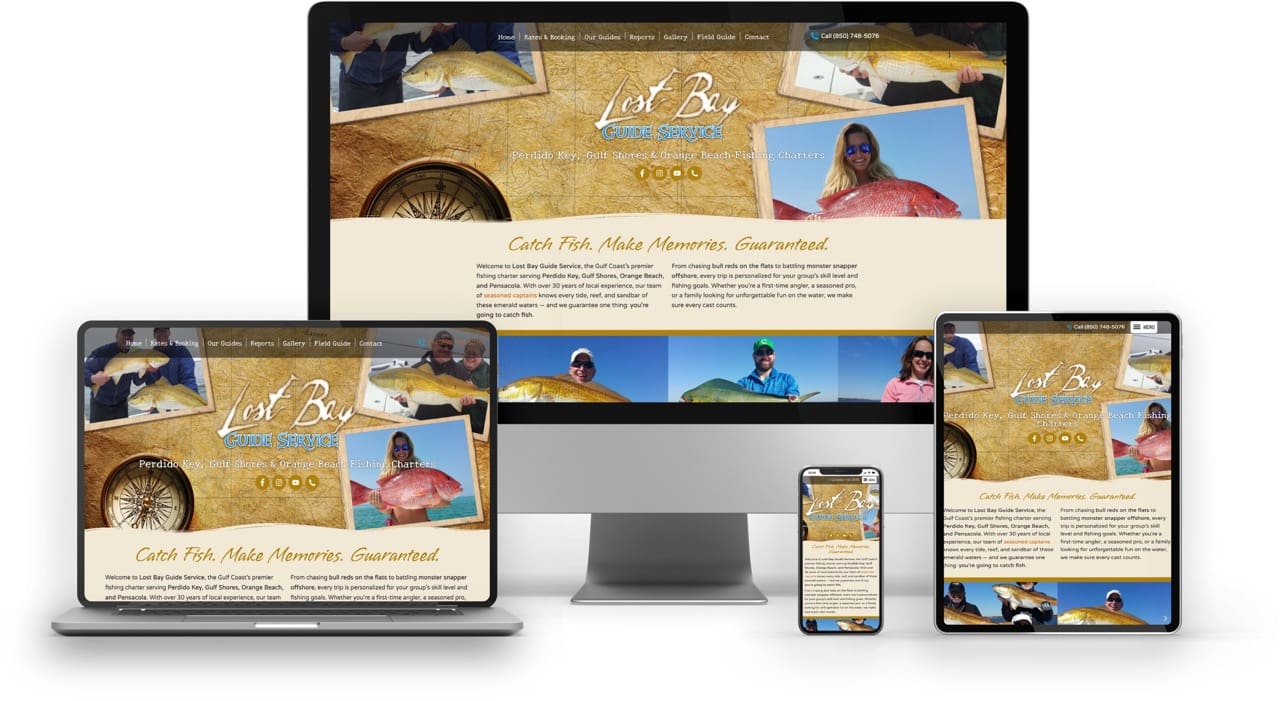
If you’re a fishing charter captain or guide, your website isn’t just a digital business card — it’s your most important sales tool.
In today’s competitive coastal markets, clients aren’t just searching for “fishing charters near me.” They’re comparing boats, reading reviews, checking photos, and looking for an easy way to book instantly. If your website doesn’t immediately build trust, showcase your experience, and make booking effortless, you’re losing trips to the competition.
This guide breaks down exactly what makes high-performing Fishing Charter Websites convert visitors into paying customers — and how to build one that stands out with bold graphics, creative design, and a unique appearance that reflects your brand.
Why Fishing Charter Websites Matter More Than Ever
Your website works 24/7 — even when you’re offshore.
Potential customers evaluate your professionalism within seconds. A strong website:
- Builds credibility and trust
- Showcases your boat and fishing experience
- Answers common client questions
- Demonstrates local expertise
- Captures bookings instantly
- Improves visibility in Google search results
For startup charter captains and established guides alike, a professionally built fishing website often becomes the difference between “inquiries” and fully booked seasons.
The 5 Core Elements of High-Converting Fishing Websites
1. Bold, Visual-First Design
Fishing is visual. Your website should be too.
Top-performing fishing guide sites prioritize:
- Full-width hero images of your boat in action
- High-resolution catch photos
- Bold graphics that reflect your brand identity
- Clean layouts with plenty of space
- Strong color palettes inspired by ocean, sunrise, or offshore tones
Your design should feel like stepping aboard your boat. Whether you run offshore tuna trips or inshore redfish charters, the visual style must match your target audience.
A cookie-cutter template won’t cut it. Your business needs a unique appearance that reflects your personality and experience.

No matter your situation, we can get your business online. Contact us today.
2. Clear, Simple Charter Booking System
The #1 mistake fishing charter websites make? Complicated booking.
Customers expect instant confirmation. A modern charter booking system should:
- Display available dates in real time
- Allow secure deposits or full payment
- Send automated confirmations
- Integrate with your calendar
- Work seamlessly on mobile devices
If visitors must call during business hours just to check availability, many will move on.
Pro Tip: The simpler the checkout process, the higher your booking conversion rate.
3. Strong Local SEO Structure
Your website must rank for local searches like:
- “Deep sea fishing in [City]”
- “Fishing guide near me”
- “Inshore fishing charters [Location]”
To compete effectively, your Fishing Charter Website should include:
- Dedicated service pages (Inshore, Offshore, Shark, Family Trips, etc.)
- Location-optimized headlines
- Optimized meta descriptions
- Fast load speeds
- Mobile-first design
- Schema markup for local businesses
Search engines reward structured content. Organized headings (H2s and H3s) improve both readability and rankings.
4. Compelling Captain Story & Authority
People don’t just book boats — they book captains.
A strong “About” section should include:
- Years of experience
- Number of trips per season
- Tournament wins (if applicable)
- Safety credentials
- Coast Guard licensing
- Local knowledge
This builds authority and reduces hesitation.
Business startups especially benefit from emphasizing training, mentorship, local roots, and passion for the fishery.
5. Content Management That’s Easy to Update
You don’t want to rely on a developer every time you post a fishing report.
A good content management system (CMS) allows you to:
- Upload new catch photos
- Publish weekly fishing reports
- Update pricing
- Add new trip packages
- Adjust seasonal offerings
Regular updates signal to Google that your fishing website is active and relevant.
Fishing reports are powerful SEO tools. They naturally incorporate keywords like target species, water conditions, and seasonal trends.
Design Trends That Work for Fishing Guide Sites
Here’s what currently performs well in the fishing niche:
Minimal Navigation
Too many menu items overwhelm visitors. Keep it simple:
- Home
- Trips
- Rates
- Gallery
- About
- Book Now
Bold Call-to-Action Buttons
Use high-contrast “Book Your Trip” buttons that stand out.
Mobile-First Layout
Over 60% of visitors browse from phones. Your site must:
- Load quickly
- Have large tap buttons
- Display booking calendars cleanly
- Avoid clutter
Real Client Photos Over Stock Images
Authenticity wins. Real smiling clients holding fish convert better than generic stock photos.
Common Mistakes Fishing Charter Websites Make
Even experienced captains fall into these traps:
Slow Website Speed
Large, uncompressed images kill load times.
No Clear Pricing
Hidden pricing creates distrust.
No Online Booking
Modern customers expect instant scheduling.
Outdated Design
An old-looking website suggests outdated equipment or poor professionalism.
Weak Branding
Generic logos and inconsistent visuals make it hard to stand out in crowded markets.
What Startup Charter Businesses Should Prioritize
If you’re launching your first fishing guide business, focus on:
- A clean, modern homepage
- Professional boat photography
- A reliable charter booking system
- Clear service descriptions
- Strong Google Business Profile integration
- Basic SEO optimization for your city and target species
You don’t need 50 pages to compete. You need strategic pages that convert.
The Psychology Behind Booked Trips
Understanding buyer behavior helps you design better fishing websites.
Visitors ask themselves:
- Is this captain experienced?
- Is the boat safe and clean?
- Will I catch fish?
- Is booking easy?
- Is this worth the price?
Your website must answer these questions clearly within the first 30 seconds.
Strategic placement of testimonials, catch photos, and trip descriptions builds confidence quickly.
Content Ideas That Drive Traffic
Blog content can dramatically improve rankings.
Consider publishing:
- Seasonal fishing reports
- “Best Time to Catch [Species] in [Location]”
- Family-friendly fishing tips
- What to bring on your charter
- Offshore vs inshore comparisons
- Top 5 target species in your area
These topics naturally incorporate search-friendly terms while establishing authority.
Creative Design vs. Overdesign
There’s a difference.
Creative design:
- Uses bold graphics thoughtfully
- Maintains readability
- Enhances branding
- Supports conversion goals
Overdesign:
- Distracts visitors
- Slows load speed
- Confuses navigation
- Hurts SEO
Your Fishing Charter Website should feel premium but clean.
Measuring Success: Key Performance Metrics
A high-performing fishing website should track:
- Conversion rate (visitors to bookings)
- Organic search traffic
- Mobile performance
- Page load speed
- Booking abandonment rate
If traffic is high but bookings are low, the issue is likely UX or booking friction.
Future-Proofing Your Fishing Website
The industry is getting more competitive. Charter captains are investing in:
- Video headers showing live action
- Drone footage of boats
- Integrated review feeds
- Automated email follow-ups
- SMS booking confirmations
Staying ahead means viewing your website as a living marketing asset — not a one-time build.
Final Thoughts: Build a Fishing Charter Website That Books Trips
Fishing Charter Websites are no longer optional — they’re your digital dock.
Whether you’re a startup guide launching your first season or an established captain looking to increase bookings, your website must:
- Reflect your professionalism
- Make booking effortless
- Rank in local search
- Showcase bold visuals
- Tell your story
When done correctly, your website doesn’t just attract traffic — it fills your calendar.
Investing in creative design, strong SEO structure, and a seamless charter booking system positions your business to outperform competitors in both search rankings and revenue.
Frequently Asked Questions (FAQ)
1. How much does a professional fishing charter website cost?
Costs vary based on custom design, booking integrations, and SEO. Basic builds may start around a few thousand dollars, while advanced custom platforms can be higher.
2. Do I really need an online charter booking system?
Yes. Most customers expect real-time booking. Without it, you risk losing clients to competitors who offer instant confirmation.
3. How long does it take for a fishing website to rank on Google?
SEO typically takes 3–6 months to see meaningful improvement, depending on competition and content consistency.
4. Should I include fishing reports on my website?
Absolutely. Regular fishing reports improve SEO, build authority, and keep visitors engaged.
5. What makes fishing guide sites different from other business websites?
They rely heavily on visual storytelling, local SEO targeting, trust-building content, and seasonal updates.
If your current website isn’t bringing in steady bookings, it’s not just a design issue — it’s a strategy issue. And strategy is what turns traffic into tight lines and full calendars.