Choosing a Fishing Charter Website Design Developer
By BoldWater Studios Editorial Team · Updated 2026-07-24
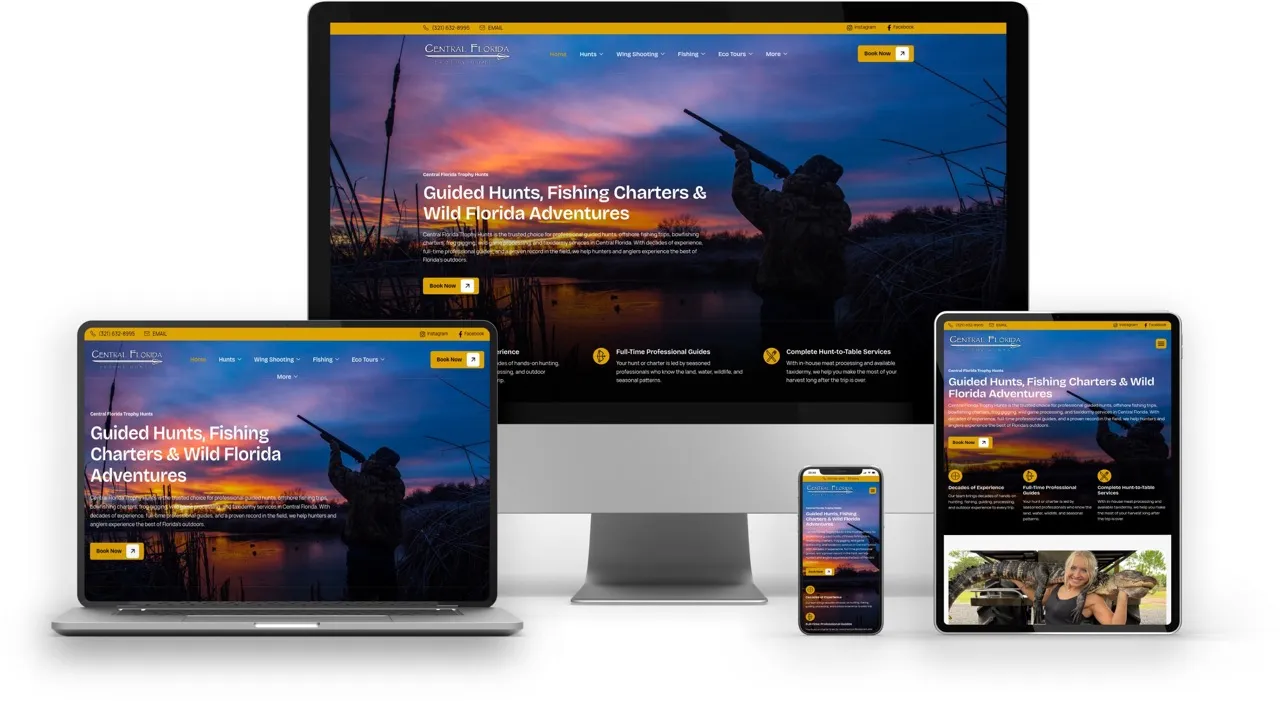
Portfolios matter: review 5 fishing charter website design tips and examples showing updated visuals rather than an outdated site, then verify the developer’s experience with lead-generating builds—like Outfitter Logic’s SEO, Google business profile, and social media integration—to ensure a trustworthy, booking-focused result.
Charter captains choosing a website developer should weigh a strong marine-specific portfolio alongside real years of experience. BoldWater Studios has spent decades building custom sites for fishing charters, guides, and marine businesses, combining original visual design with booking-focused features. We look for developers who understand tides, tournaments, and dock-side branding — not generic templates.
Why Does Your Charter Need A Modern Website?
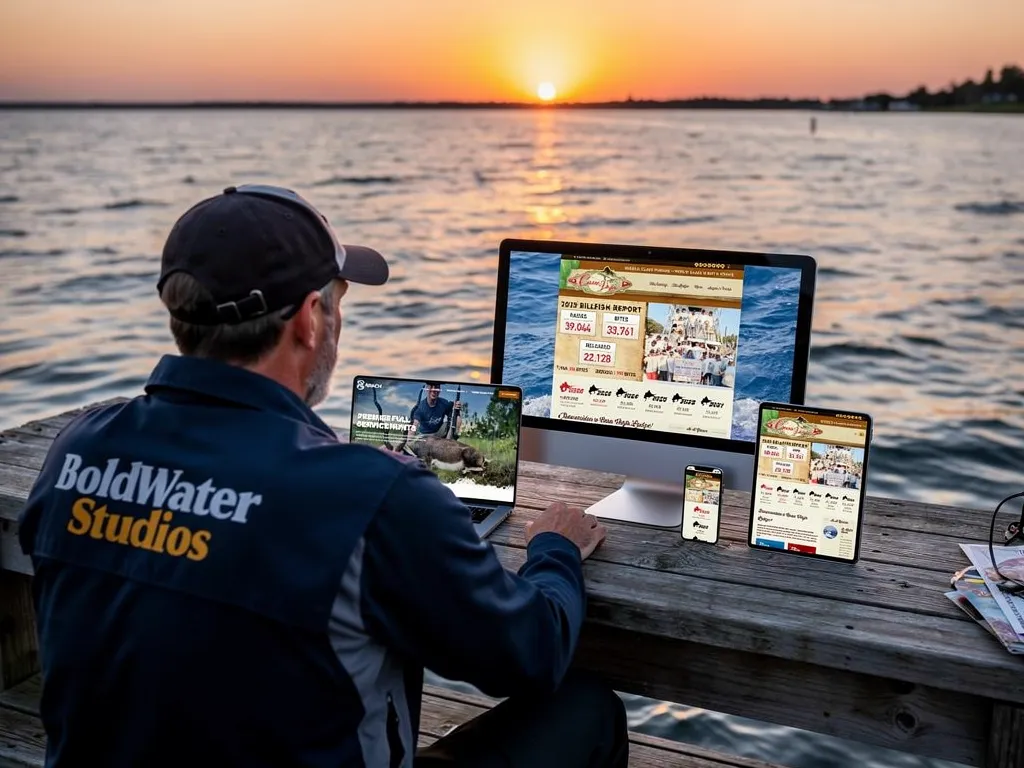
A modern website works as the tool that gets a charter found online, builds trust with prospective anglers, and turns casual browsers into confirmed bookings. cite-1 Charters without one lose ground every day to competitors who show up first in a search. We’ve watched this pattern repeat across two decades of marine industry work: the boats getting booked are the ones anglers can actually find.
Anglers today research and vet a captain online long before they ever pick up the phone. That means the website often serves as the first impression — and the deciding factor. We build every fishing charter website design project with that reality in mind. A dated or confusing site quietly costs bookings before a captain even knows a customer looked.
Does a fishing guide really need their own website?
Yes. Solo guides face the same discovery problem as multi-boat operations. A dedicated fishing guide website design attracts traffic and drives more bookings in the short term. Steadily building a bigger, more visible, and more trustworthy brand over time.
What happens if a charter skips a website upgrade?
Skipping the upgrade means losing the compounding benefits a strong site delivers:
- Fewer new customers finding the business through search
- Weaker first impressions compared to competitors with modern sites
- Slower growth in reputation and referral bookings over time
We treat a charter’s website as a long-term asset, not a one-time project. Because that’s exactly how the businesses that grow fastest treat it too.
What Visual Design Choices Build Instant Trust?
Clean typography, authentic species artwork, and a consistent color palette build trust before a single word gets read. Visitors size up a charter’s credibility within seconds of landing on the homepage — the same way they judge a boat wrap or a logo on a shirt. Weak or generic visuals cost bookings before the phone even rings.
We build every fishing charter website design around the same visual identity a captain wears on apparel and displays on the boat. That means original custom artwork, not stock photos of someone else’s redfish. Authentic species illustration matters here. An angler who fishes tarpon wants to see tarpon, drawn correctly, not a generic gamefish silhouette. Typography needs to hold up everywhere: on a hat, a decal, a homepage banner.
Why does branding consistency matter for a charter site?
Consistency turns a first-time visitor into a repeat customer who recognizes the brand on the dock. When a logo, boat graphics, and website share the same colors and artwork, trust builds faster because everything feels like one operation instead of three mismatched efforts.
Our approach to fishing guide website design treats visuals and function as one job, not two separate projects:
- Custom illustration and typography built for both screens and physical printing
- A layout that stays distinctive without slowing load times or confusing navigation
- Mobile-first structure so photos and booking buttons render clearly on a phone
- Content organization that supports search visibility and lead generation, not just looks
Design without usability fails. A charter site has to look sharp, load fast, and make booking simple, or the visual polish never gets the chance to convert a visitor into a paying angler.
How Do You Judge A Developer's Marine Experience?
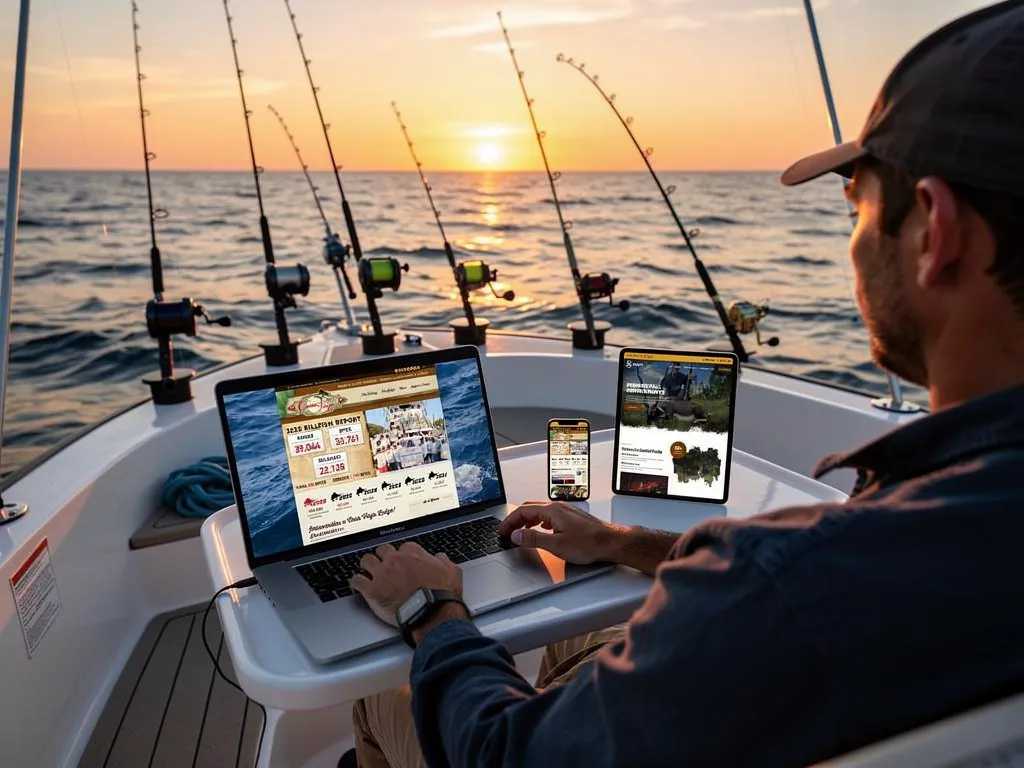
Marine experience shows up in the details a landlubber developer misses. Time on the water teaches a designer what real anglers actually respond to. That knowledge separates generic templates from fishing charter website design that converts browsers into bookings. We built our studio around that principle.
Does the designer actually fish or boat?
Our team members are active anglers, not office-bound designers guessing at marine culture. That firsthand experience shapes fishing guide website design work that resonates with an angling audience instead of falling flat. A developer who has run offshore, worked a bait well, or gaffed a mahi understands what belongs on a charter homepage — and what doesn’t.
Local market knowledge matters just as much as fishing knowledge. We know the competition, the customer base, and the culture of the coastal markets we serve, which lets us produce design work that actually connects rather than reading as generic stock content dropped into a template.
Brand pedigree offers another useful signal. Ask any developer these questions before hiring:
- Have they created artwork for recognized marine or fishing brands?
- Can they name specific charter or outfitter clients they’ve served?
- How long have they operated in the marine design space?
- Do they understand regional fishing methods and target species?
Decades of work with brands like Suzuki Marine, Pelagic, Boston Whaler, and Sea Ray — alongside fishing lodges, marinas, tackle companies, and tournament organizations from the Florida Keys to the Virgin Islands — taught us what feels authentic to people who spend their lives on the water. That’s a different skillset than building websites for restaurants or retail shops.
Longevity counts too. We’ve served local businesses for more than 25 years — startups, mom-and-pop charters, and established organizations alike. And that staying power reflects reliability few newer studios can match.
What Portfolio And Process Signals Matter Most?
Portfolio work reveals whether a studio builds original sites or leans on recycled templates. Original concepts, developed entirely from scratch with no templates or generators, help a charter boat stand apart at the marina instead of blending into a sea of look-alike booking pages. That distinction matters more than most captains realize when comparing proposals.
We build every fishing charter website design project this way. Starting with the client’s boat, brand, and target angler rather than a stock theme. A strong developer treats visual design as one piece of a larger system. Content organization, mobile usability, lead generation, and search visibility all carry equal weight in our process.
What should a good developer prioritize besides looks?
A good developer prioritizes structure that turns visitors into booked trips, not just a polished homepage. We ask how a site organizes trip types, pricing, and contact paths before we ask about color palettes.
Why do so many charter websites go stale fast?
Charter sites without ongoing support age out quickly, often within a year or two of launch. The same holds true for boat electronics and the latest rods and reels. Technology moves, and a site left untouched falls behind. Any solid fishing guide website design partner should offer maintenance, not a one-time handoff — new trip pages, fishing reports, seasonal content, photo and video galleries, and booking or inquiry forms added as the business grows, not just a static homepage frozen at launch.
Before hiring, we recommend asking prospective designers about these signals:
- Original artwork and layouts versus template-based builds
- A track record of organic search ranking that generates real leads
- Post-launch support plans and update frequency
- Content structure built around trip bookings, not just brochure pages
- Pages built around real customer search behavior — location, target species, trip type, season, and technique — rather than a single generic “fishing” page
A studio that ranks well organically turns a website into a steady lead source rather than a static digital brochure.
How Do You Avoid Costly Website Mistakes?

Costly mistakes usually trace back to one root cause: treating the website as a checkbox instead of a growth tool. We’ve watched captains rush a build in a weekend, then wonder why the phone stays quiet. Combining thoughtful fishing charter website design with a real marketing strategy makes a measurable difference in how many trips actually get booked.
Skipping that combination costs more than a few missed inquiries. A rushed site sends a weak first impression. That impression is hard to reverse once a visitor has already judged the business and clicked away.
Why does booking friction matter so much?
Every extra step between a visitor and a confirmed reservation gives that visitor a reason to leave. A site engineered to make booking simple removes friction that would otherwise cost a captain paying customers. cite-1 We build every project around that principle first.
What happens when a charter skips proper investment in the site?
The site sits anchored at the bottom of search results, doing nothing. Putting real time, thought, and effort into fishing guide website design turns the site into a homebase that keeps working quietly in the background, churning out trips and building a client list around the clock.
Avoid these common traps:
- Publishing a generic template and calling it finished
- Burying the booking button behind extra clicks
- Ignoring how the site performs in search results
- Never revisiting the site after launch
Small fixes now prevent lost bookings for years.
Choosing a fishing charter website developer comes down to two things: a strong visual portfolio and real experience in the marine industry. We’ve found the best results come from pairing professional design credentials with genuine familiarity of charter operations, fishing culture, and coastal markets. A developer who understands your business — not just web technology — delivers a site that authentically represents your charter, attracts qualified customers, and performs reliably over time. That combination of expertise and industry knowledge is what separates effective web development from generic solutions.